The quiet leaks draining your profit every time you rent, and exactly how to plug each one.

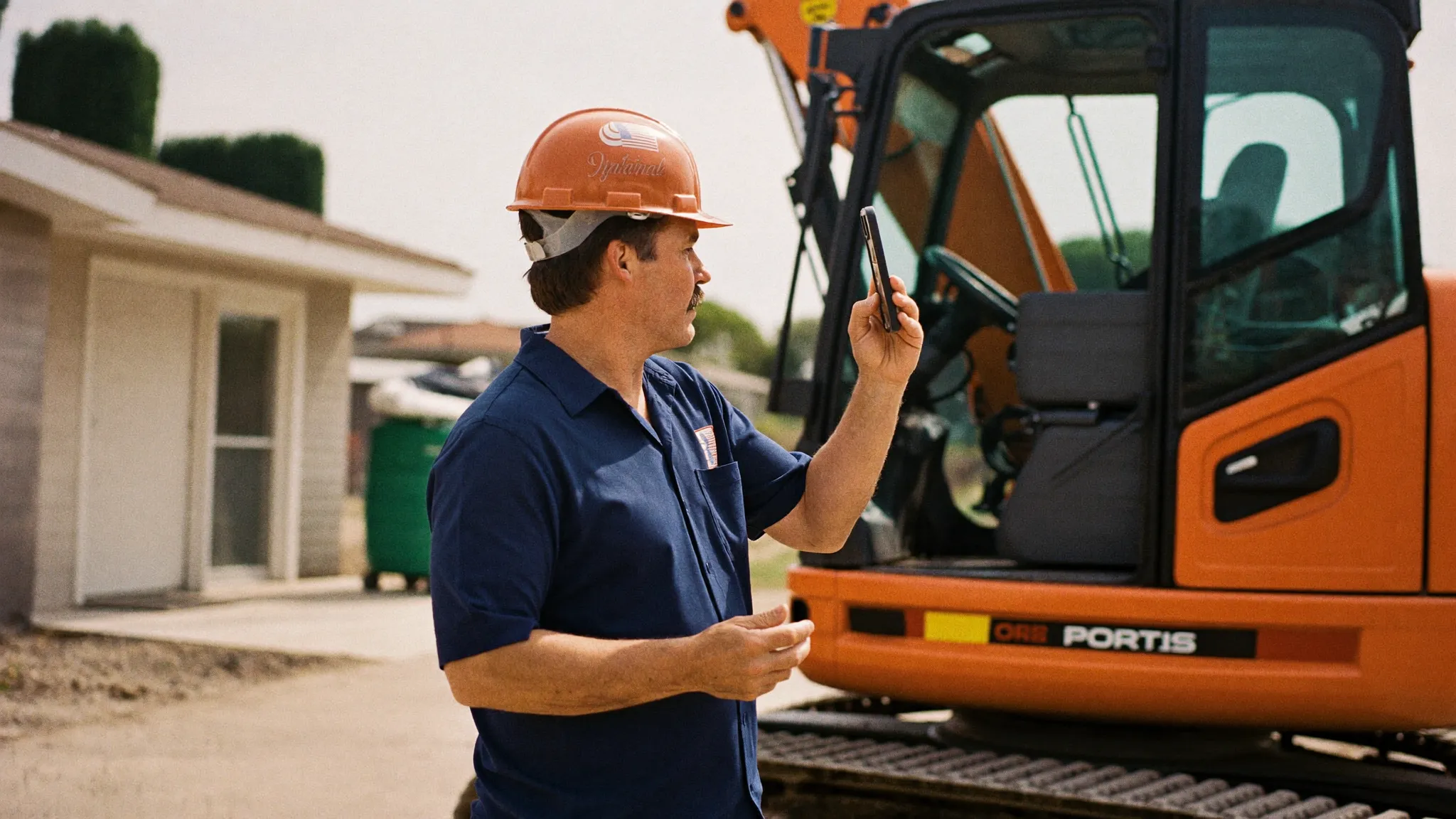
Renting equipment should be simple. You need a skid steer for a week, you call the rental yard, they drop it off, you use it, they pick it up. Done.
But somewhere between "simple" and "done," most contractors are quietly hemorrhaging money. A hundred bucks here, three hundred there, a surprise charge on the invoice that nobody catches because it's buried on page four.
Over a year, these mistakes add up to thousands of dollars, money that comes straight out of your profit margin. And the frustrating part is, they're all avoidable.
Here are the seven rental mistakes I see contractors make repeatedly, and how to stop making them.

This one seems obvious, and yet most contractors have one rental yard they use for everything. They call the same place every time because it's closest, they know the counter guy, and it's easy.
Easy is expensive.
Rental rates vary wildly between companies, sometimes 30% to 50% for the exact same piece of equipment. A mini excavator that costs $350/day at one yard might be $250/day at another one fifteen minutes down the road. Multiply that across a five-day rental and you just saved $500 by making one extra phone call.
Here's what to do:
Get quotes from at least three rental companies for any equipment over $200/day. It takes ten minutes and often saves hundreds.
Ask about weekly and monthly rates. Most rental yards have daily, weekly, and monthly pricing tiers. The weekly rate is almost always significantly cheaper per day than the daily rate. If you think you'll need a machine for four or five days, rent it for the full week, it's often the same price or cheaper.
Negotiate. Most rental rates aren't carved in stone. If you rent frequently, ask for a contractor discount or a volume rate. "I rent equipment about twice a month, what can you do on pricing?" You'd be surprised how often they'll knock 10% to 15% off.
Check the national chains and the local yards. United Rentals and Sunbelt have consistent inventory and online booking. For temporary fencing, barricades, and site sanitation on one account, National Construction Rentals has been the national specialist since 1962. Local yards sometimes beat them on price and are more flexible on terms. Compare both.
This mistake goes both ways, and both directions cost you.
Too small: You rent a compact track loader because it's cheaper, but the job really needed a full-size skid steer. Now your operator is making twice as many passes, the job takes an extra day, and between the labor cost and the extra rental day, you spent more than if you'd rented the bigger machine from the start.
Too big: You rent a 20-ton excavator because you want to make sure you have enough machine. But the job only needed a 10-ton. You paid double the rental rate, the delivery fee was higher, and you needed a wider access path that required extra site prep.
The fix is straightforward: match the equipment to the job, not to your ego or your anxiety.
Before you call the rental yard, know three things:
If you're not sure what size you need, ask the rental company. Their counter people match equipment to jobs all day long. Give them the specifics and they'll point you in the right direction.
Nobody reads the contract. You're in a hurry, the rental counter is busy, you sign where they point and drive off. And then the invoice shows up with charges you never expected.
Here's what's hiding in the fine print that'll hit your wallet:
Environmental fees. Some companies charge a flat environmental or fuel service fee, $25 to $75 per rental, for "environmental compliance." It's basically a junk fee, and it's non-negotiable at most places. At least know it's coming.
Damage waivers. The damage waiver (sometimes called LDW or CDW) is optional insurance that covers you if the equipment gets damaged. It's typically 10% to 15% of the rental rate added on daily. Whether you take it depends on your own insurance coverage, but you should make that decision intentionally, not discover it on your invoice.
Overtime hours. Most rental companies price their equipment based on an eight-hour day. Run it for ten hours? You're paying overtime. Run it for twelve? You might be paying for two days. This is the single most common surprise charge, and it catches contractors constantly.
Fuel charges. Some companies require you to return equipment with a full tank. If you don't, they'll fill it up and charge you a markup, often $2 to $4 more per gallon than the gas station price. Others charge a flat fuel fee regardless. Know the policy before you pick up the machine.
Cleaning fees. Return a mud-caked excavator and you might see a $50 to $200 cleaning charge. It takes fifteen minutes to hose it down before it goes back. Do it.
Read the contract once, the first time you rent from a new company. After that, you'll know what to expect. But that first read-through can save you hundreds.
This one is pure laziness, and I say that because I've done it myself.
You rent a piece of equipment for a week. You finish the work in four days. The machine sits on the job site for three more days because you're busy with other things and it's easier to just let it run until the weekly rate expires.
Except now the job site is done and you need the same type of equipment on a different job in two weeks. So you rent it again. If you'd just kept the first rental through the weekend and moved it to the next site, you'd have one rental instead of two.
Or worse: you rent for a week, the work takes eight days because of weather, and instead of calling to extend at the weekly rate, you just keep it and get charged daily for days eight, nine, and ten. Those daily rates are way higher than the equivalent weekly or monthly prorated rate.
The fix:
This is the mistake that turns into an argument three weeks later when you get an invoice with a $1,200 damage charge for a cracked windshield you didn't cause.
Here's how it happens: the rental company drops off an excavator. Your guy hops on and starts digging. Nobody walks around the machine first. Nobody checks for existing damage. Nobody takes photos.
Two weeks later, you get a call: "There's damage to the right-side glass and a hydraulic leak at the boom cylinder. We're charging you for repairs."
Was the glass already cracked when it showed up? Maybe. Was the hydraulic leak pre-existing? Possibly. Can you prove it? Nope. Because nobody looked.
The fix is dead simple and takes five minutes:
This isn't paranoia. This is basic business protection. Five minutes of documentation can save you thousands in disputed damage charges.
Even if you inspect on delivery and return, you can still get burned if something happens during use and you don't handle it right.
Your operator catches a boulder and cracks a tooth on the bucket. A hydraulic hose blows. A window gets hit by a rock. These things happen on job sites, equipment takes a beating.
Here's where contractors mess up: they either ignore the damage and hope nobody notices at return (they will), or they panic and try to fix it themselves (often making it worse).
What to do when equipment gets damaged:
Being upfront about damage almost always results in a better outcome than trying to hide it. Rental companies deal with damage all day long. They're used to it. What they're not used to, and don't appreciate, is discovering unreported damage at return.
This is the biggest-picture mistake on the list, and it's the one that costs contractors the most money over time without them ever realizing it.
The general rule of thumb in the equipment world: if you're renting a piece of equipment more than 60% to 70% of the time, you should probably own it.
Let's do the math on a common example.
Say you rent a skid steer about 15 times a year, averaging $1,800 per week. That's $27,000 in annual rental costs.
A decent used skid steer costs $25,000 to $40,000. Even on the high end, you break even in less than two years of ownership versus renting. After that, it's free, minus maintenance, insurance, and storage, which collectively run maybe $3,000 to $5,000 per year.
Ownership isn't always the answer. If you need a crane twice a year, rent it. If you need a specialty attachment for one weird job, rent it. If you're not sure the work volume will continue, rent it.
But for the core equipment you use regularly, your skid steer, your mini excavator, your trailer, your compressor, run the numbers. Many contractors are spending $30,000 to $50,000 per year on rental equipment they could own outright.
When buying makes sense:
When renting still makes sense:
Leasing as a middle ground: Equipment leasing lets you make monthly payments like ownership but with lower upfront costs, maintenance often included, and the option to upgrade at the end of the term. For equipment you'll use heavily but don't want to buy outright, leasing splits the difference.
Here's a quick-reference checklist to run through every time you rent equipment:
Tape this to the inside of your filing cabinet or save it in your phone. It takes ten minutes to go through and it'll save you thousands over the course of a year.
Equipment rental is a necessary part of contracting. There's nothing wrong with renting, it gives you flexibility, eliminates maintenance headaches, and lets you access equipment you couldn't afford to buy.
But renting carelessly is one of those slow leaks that drains your profit without you noticing. A few hundred here, a surprise charge there, a rental you didn't need, it adds up to real money over the course of a year.
Be intentional about it. Shop rates, right-size your equipment, read the contract, inspect on delivery, and run the numbers on buying the stuff you use all the time.
Your profit margin will thank you.
Browse VendorRack to compare equipment suppliers and rental yards that serve contractors, with reviews from real crews.
Quick answers to what contractors ask us most about renting equipment.
No fluff and no sales pitches. Just the tools, software, and services worth your money, tested by contractors like you.
Browse the equipment, suppliers, and services built for contractors, all in one place, all vetted by the trades.

The directory where residential contractors find the tools, software, and services they actually trust.
