Rent until your own rental invoices prove you should buy. How to run that math honestly, the full cost of owning, the 2026 tax angle, and how to rent smarter in the meantime.

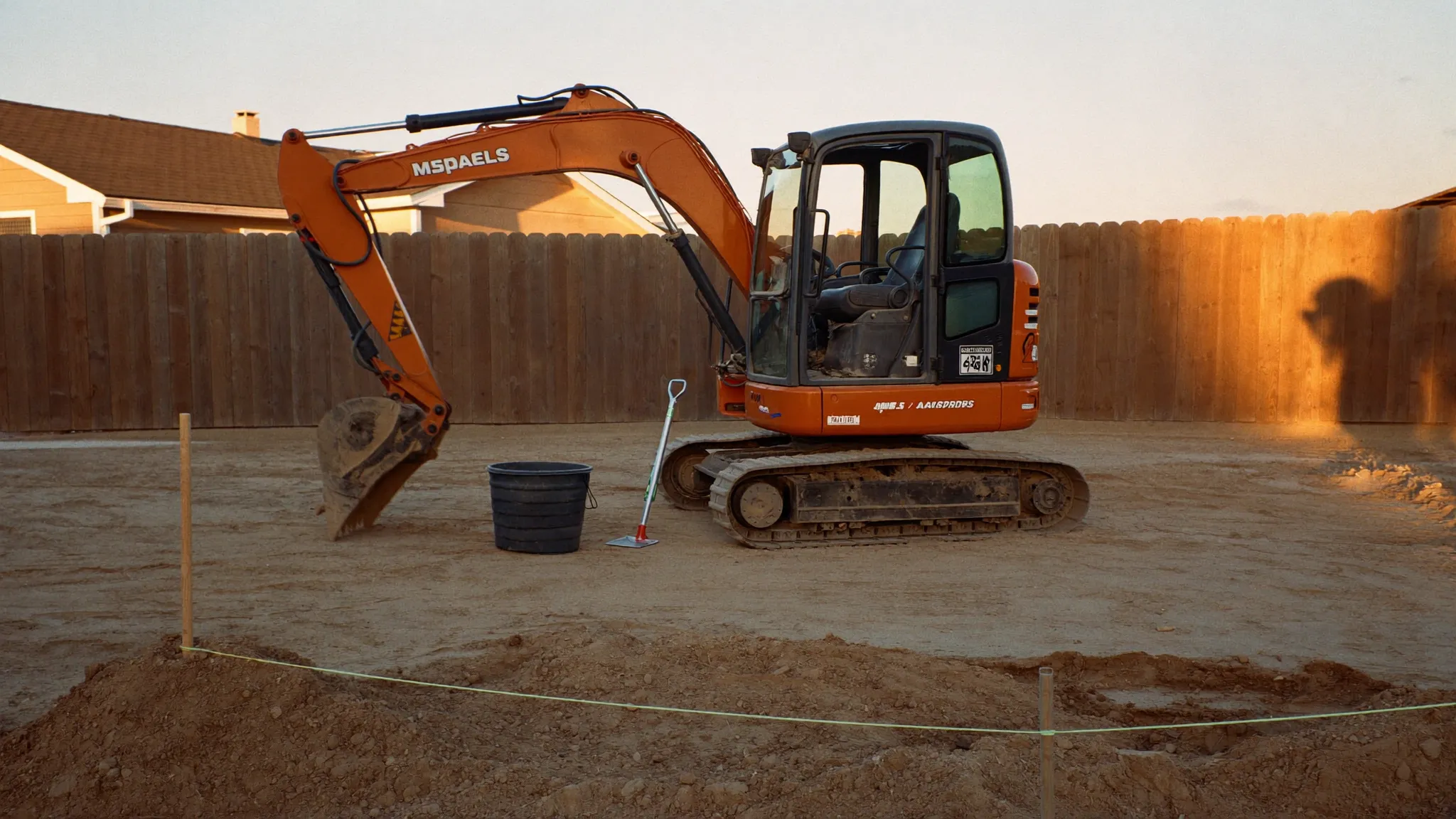
Short answer first: rent until your own rental invoices prove you should buy. Pull the last twelve months of receipts for one machine. If what you spent renting it is approaching what it would cost you to own it for a year, payment, insurance, storage, maintenance, hauling, all of it, then buying deserves a hard look. If it isn't close, keep renting and stop feeling guilty about it. The rental counter isn't a tax on contractors who can't afford iron. For a lot of machines, it's simply the right answer.
That's the whole framework. The rest of this post is how to run that math honestly, because the mistake contractors make isn't renting too much or buying too much. It's deciding with their gut, in both directions.
The first gut feeling says owning is always smarter because rent money disappears and equity is forever. That's how a contractor ends up with a skid steer that runs forty days a year, a loan payment that runs twelve months a year, and a machine quietly rusting behind the shop while he pays to insure it.
The second gut feeling says renting keeps you flexible, so why ever commit. That's how a contractor ends up renting the same mini excavator thirty weeks a year for three years running and paying for the machine twice without ever owning it.
Both feelings are about identity. Owning iron feels like being established. Renting feels like staying nimble. Neither feeling reads your books. The receipts read your books, so let them make the call.
The loan payment is the number everyone knows, and it's usually only part of the story. Before you compare anything to your rental spend, build the full annual cost of owning:
Add those up for a real year and the true cost of owning often lands at half again the loan payment or more. That's the number your rental receipts have to beat, not the payment alone.
Renting has its own honest ledger, and it's more than the day rate.
Rates are typically quoted daily, weekly, and monthly, and the longer the term, the cheaper each day gets. Where renting quietly bleeds you is in the gaps: the machine you kept three extra days because the job slipped, the delivery and pickup fees both ways, the damage waiver percentage on every invoice, the fuel charge because nobody topped it off, and the Saturday you paid for because returning it Friday didn't fit the schedule.
None of that makes renting wrong. It makes renting worth tracking. Set up one expense category per machine type in your books, code every rental invoice to it, and at the end of the year you'll know exactly what the skid steer habit costs. If your books can't answer that question in five minutes, that's a bookkeeping problem before it's an equipment problem, and the fix is in Bookkeeping for Contractors: The Simple System.
The other real cost of renting is availability. The machine you need has a way of being gone the same week everyone else in town needs it. If a piece of equipment is genuinely critical to your schedule, availability risk belongs in the decision alongside price.
Here's the whole exercise. It takes one evening.
Step one. Pick the machine you rent most. Just one. Run this per machine, because the answer is usually different for each.
Step two. Add up twelve months of rental invoices for it, including delivery, waivers, fuel, and the extra days.
Step three. Price the purchase. New quote, and a used quote from a dealer or an auction site, because used changes this math a lot. Rental companies also sell off their fleet machines with service records, which is often the sweet spot. [Sunbelt Rentals](/vendors/sunbelt-rentals/) and United Rentals both run used equipment sales programs alongside the rental counter.
Step four. Build the full annual ownership number from the list above. Payment, insurance, maintenance, storage, hauling.
Step five. Compare. If a year of renting costs meaningfully less than a year of owning, rent and revisit next year. If renting costs as much or more, and you expect the work to keep coming, buy. If it's close, the tiebreakers below decide it.
The old shop rule of thumb says a machine you need most of the year should be owned and a machine you need occasionally should be rented, and the receipts exercise is just that rule with real numbers on it. What surprises most contractors who actually run it is how often the answer is "own the workhorse, rent everything else." The truck, the trailer, the one machine that's on nearly every job, those earn their keep. The specialty iron that shows up twice a year never does.

When the math lands close, decide on these:
How steady is the work? A payment is a promise to your slowest future month, not your busiest one. If your backlog is six weeks deep, that's not steady, that's one good stretch. Rent through it.
How specialized is the machine? General machines like skid steers hold value and stay busy across many kinds of jobs. A highly specialized attachment or a machine tied to one type of project is a riskier own, because your ability to keep it busy depends on selling that exact work forever.
Who's going to maintain it? If nobody in your outfit greases, checks fluids, and logs hours without being told, an owned machine will age in dog years. Rental fleets are maintained on a schedule by people paid to do it. Be honest about whether your shop is.
Can you rent it out yourself? Some contractors offset ownership by renting their machine to other local outfits through peer-to-peer arrangements. It's real money if you have the temperament for it, and a source of scratched paint and arguments if you don't.
Buying equipment comes with a genuinely large tax carrot right now, and it deserves a paragraph, not a starring role.
For tax year 2026, Section 179 lets a business write off up to $2,560,000 in qualifying equipment purchases in the year the equipment is placed in service, with the deduction phasing out for businesses that buy more than $4,090,000 in a year. On top of that, 100 percent bonus depreciation is back for qualifying equipment acquired and placed in service after January 19, 2025, and under current law it's permanent. Between the two, most small contractors can deduct the full cost of a machine in year one instead of depreciating it over many years. Used equipment can qualify too. I'm not a tax advisor and the details have edges, so have your CPA confirm how it applies to you before you sign anything.
Here's the caution: a tax deduction is a discount, not a reason. Writing off a machine you didn't need still means you bought a machine you didn't need. Run the rental-receipts math first. If the math says buy, the tax treatment makes buying meaningfully sweeter. If the math says rent, no deduction rescues a machine that sits.
If the math says buy but cash is the obstacle, equipment loans and leases are one of the more competitive corners of contractor lending, and the landscape is covered in Contractor Financing Options.
For most contractors reading this, the answer on most machines will be keep renting. Fine. Do it like it's a procurement decision instead of a panic decision:
The renting mistakes that actually hurt, keeping machines through gaps, eating delivery fees on short rentals, nobody owning the return, are their own post: Equipment Rental Mistakes That Eat Your Profit.
Rent the maybes. Own the always. Let twelve months of receipts tell you which is which, rerun the numbers once a year, and don't let either gut feeling, the pride of ownership or the comfort of flexibility, spend your money for you. The contractor who wins this decision isn't the one with the biggest yard full of iron. It's the one whose machines, owned and rented both, all earn more than they cost.
Browse VendorRack to compare rental companies, equipment marketplaces, and financing providers built for residential contractors.
Quick answers to what contractors ask us most about renting versus owning.
No fluff and no sales pitches. Just the tools, software, and services worth your money, tested by contractors like you.
Browse the rental companies, equipment marketplaces, and financing providers built for the trades, all in one place, all vetted by contractors.

The directory where residential contractors find the tools, software, and services they actually trust.
