Real 2026 numbers, the five things your policy will not pay for, and the one exclusion that surprises almost every contractor.

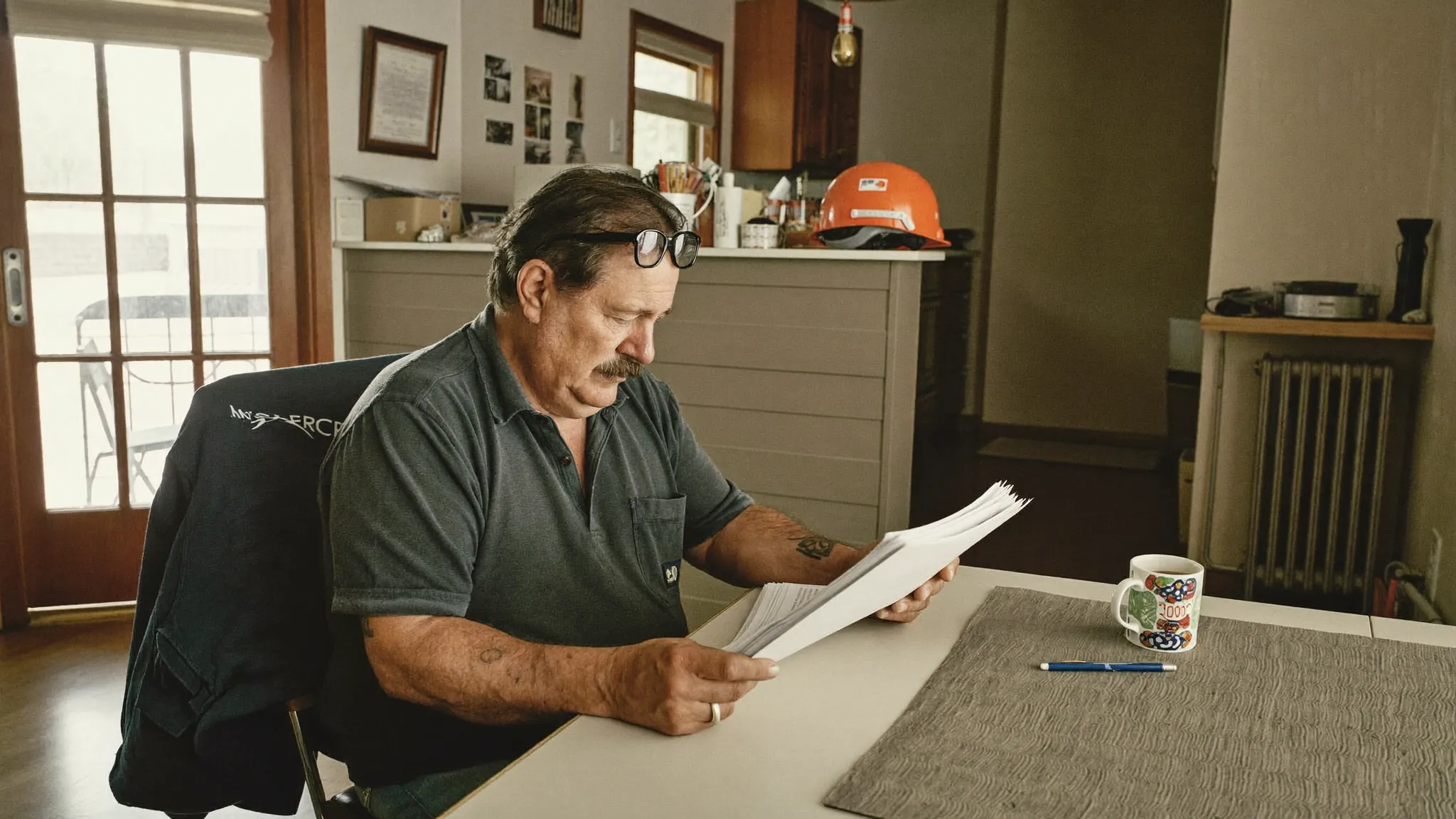
Most contractors carry general liability because a GC asked for a certificate, or a homeowner did, or the state made them get one for a license. They pay the bill, file the binder, and never open it.
That's fine right up until a claim, and then you find out the two things nobody told you: what your policy actually pays for, and what it doesn't. The second list is longer than you think, and one item on it surprises almost everybody.
Here's the plain-English version, with real 2026 numbers.
General liability, or GL, covers damage you cause to other people and other people's property while running your business. That's it. That's the whole idea.
Three buckets:
That last one matters more than contractors realize, because your exposure doesn't end when you cash the check. Completed operations follows the work.
The word doing all the heavy lifting is "third-party." Other people. Not your crew, not your truck, not your tools, and, we'll get to this, not your own workmanship.
Real numbers, not "it depends."
Insureon, which sells to a lot of small contractors, reports that construction businesses pay a median of about $82 a month, or $981 a year for general liability. General contractors specifically run higher, around $142 a month, or roughly $1,700 a year. Plumbing outfits sit in between at about $115 a month.
Those are medians, which is the right number to look at. Averages get wrecked by the one guy paying $40,000.
By trade, the picture spreads out fast:
| Trade | Typical GL range |
|---|---|
| Painting | roughly $200 to $265 a month |
| Remodeling | roughly $80 to $345 a month |
| General contracting | around $142 a month median |
| Roofing | often $500+ a month, and the highest of the residential trades |
Roofing is the expensive one for the obvious reason: people fall off roofs, and water damage claims are big. Framing runs hot for the same kind of reason.
Four things move the number, and only one of them is negotiable.
1. Your trade. This is the single biggest factor. Agents commonly rate most trades around 1% of annual revenue, with roofing and framing quoted meaningfully higher, often in the 1.5% to 1.75% range. Use that as a sanity check on a quote, not a promise.
2. Your revenue. GL is usually rated on sales or payroll, so a $2 million company pays multiples of what a $300,000 company pays. Grow, and your premium grows with you. And yes, they audit at the end of the term. Underreport your revenue to save a few hundred bucks now and you'll write a bigger check later.
3. Where you work. State and even county matter, because they change how expensive lawsuits are.
4. Your claims history. The one thing you control. A clean five years is real money.
Here's the part worth internalizing: your premium is a percentage of what you sell. It's a cost of goods, not a fixed overhead line. Price it into your jobs like you price material, and it stops feeling like a bill and starts feeling like a number.
This is the section to actually read.
1. Your own employees. If your guy falls off a ladder, GL does nothing. That's workers compensation, a completely separate policy, and in most states it's the one that's legally required once you have employees.
2. Your vehicles. A crash in the work truck is commercial auto. Your personal policy will likely deny a claim the second they learn you were hauling material to a job.
3. Your tools and equipment. If your trailer gets cleaned out overnight, GL pays nothing. You want tools and equipment coverage, sometimes called inland marine, or a business owner's policy with property on it.
4. Bad advice. If you specified the wrong system and the client's suing over the recommendation rather than the damage, that's professional liability, also called errors and omissions.
5. Redoing your own bad work. This is the one that blindsides people, so let's do it properly.
Every standard general liability policy excludes property damage to your own completed work. Insurance people call it the "your work" exclusion. It's not fine print buried by a shady carrier, it's in the standard form, and it's in every policy you'll be offered.
What that means in the driveway:
You install a roof. It leaks. Water runs down and ruins the drywall, the flooring, and the homeowner's furniture.
That's the deal, and it's consistent across the industry. GL is not a warranty on your workmanship. It's protection against what your workmanship damages.
Two things follow from that. First, budget for callbacks and rework as a real line item, because no policy is going to carry it for you. Second, when a salesperson implies your policy "covers your work," ask them to point at the clause. They can't, because it isn't there.
The standard is $1 million per occurrence and $2 million aggregate, and roughly 85% of small business owners choose exactly that. Insureon reports the typical construction policy also carries about a $500 deductible.
What those two numbers mean, since the terms are useless on their own: per occurrence is the most the policy pays for any single incident. Aggregate is the most it pays across the whole policy year. Two bad claims in one year can exhaust an aggregate, and then you're bare for the rest of the term.
Don't buy the state minimum to save $30 a month. A $300,000 limit sounds like plenty until you read what a single serious injury settlement costs. And practically speaking, $1 million per occurrence is what most GCs require before they'll let you on a job anyway, so a smaller policy can quietly cost you work.
If you're doing larger residential jobs or working for builders who ask for more, an umbrella policy that sits on top of your GL is usually cheaper than raising the underlying limits.
Three terms show up in contracts, they sound interchangeable, and they're completely different things.
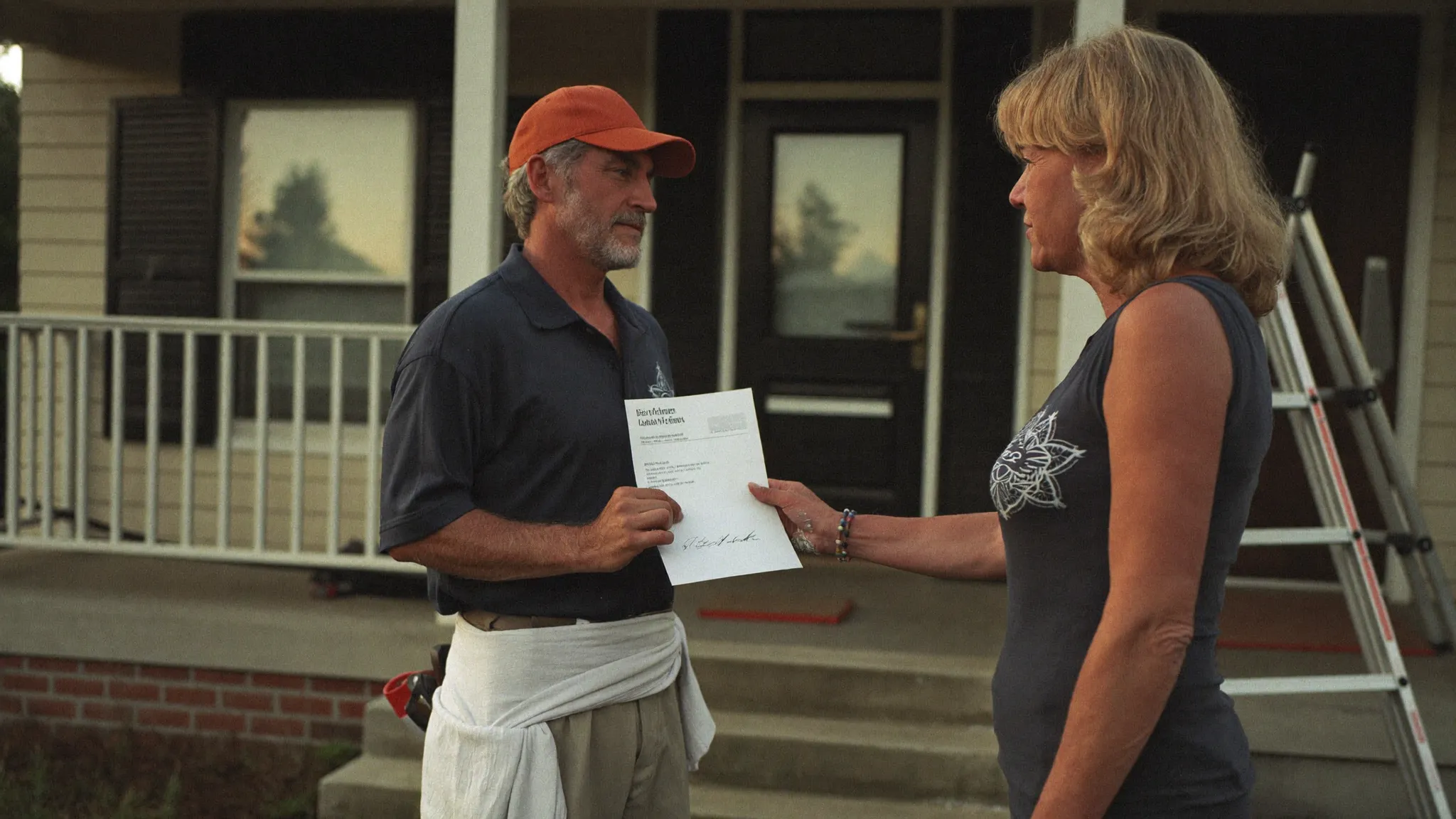
Certificate of insurance (COI). A one-page ACORD form that summarizes your policy: carrier, coverage types, limits, and dates. Your agent issues them free, usually same day. Important detail: a COI proves coverage existed when it was issued. It doesn't create coverage and it doesn't change your policy. It's a receipt, not a contract.
Additional insured endorsement. This one actually does something. It's a change to your policy that extends your coverage to somebody else, usually the GC or the property owner, for claims connected to your work. When a builder says "add us as additional insured," a certificate alone doesn't satisfy that. The endorsement does.
Waiver of subrogation. This says your insurer gives up its right to go after the other party to recover what it paid. Contracts request it constantly. It's not free, carriers can charge for it, and the increase depends on your coverage and how broad the waiver is. Ask what it costs before you agree to a blanket one across every contract you sign.
Practical move: ask your agent to set up blanket additional insured and blanket waiver endorsements if you're constantly issuing them. It's usually cheaper and much faster than one-off requests every time a GC emails you.
A business owner's policy bundles general liability with commercial property and business interruption into one policy. Industry estimates put the bundle at roughly 10% to 15% cheaper than buying those pieces separately, and some carriers go further.
It's worth it if you have real property to protect: a shop, an office, inventory, a yard. If you're mobile and lean, with nothing at a fixed location worth insuring, standalone GL is cleaner and you're not paying for property coverage on property you don't have.
Either way, a BOP does not include workers comp, commercial auto, or professional liability. Those stay separate no matter what anybody bundles.
The one thing not to do is buy on price alone. The cheapest quote is often cheap because the limits are low or the exclusions are wide, and you find that out on the worst day of your year.
General liability covers other people's bodies and other people's property when your work goes wrong. It does not cover your crew, your truck, your tools, or the cost of redoing your own work.
Most residential contractors should carry $1 million per occurrence and $2 million aggregate. Most will pay somewhere between $1,000 and $3,000 a year for it, with roofing well above that and painting and light remodel work below. Get three quotes at every renewal, read your exclusions once so you know what's actually in there, and price the premium into your jobs instead of resenting it.
Then put the binder somewhere you can find it, and go back to work.
*One honest note: we're a directory, not an insurance agency, and none of this is a substitute for a licensed agent who knows your state and your trade. Use it to walk into that conversation knowing what to ask.*
Browse VendorRack to see the carriers and brokers that actually write policies for residential contractors.
Quick answers to what contractors ask us most about general liability.
No fluff and no sales pitches. Just the tools, software, and services worth your money, tested by contractors like you.
Browse the carriers and brokers that write policies for residential contractors, all in one place, all vetted by the trades.

The directory where residential contractors find the tools, software, and services they actually trust.
